Member Publications – June 2026
Member Publications - June 2026
We are pleased to share the latest publication from our member:
- Rane, Halim, “Jihād and the Protection of Places of Worship in Early Islam: Between Covenant, Conquest, and a Just Peace” Religions 17, no. 1: 86. Read Article Here.
- Rane, Halim. “An Islamic Philosophy of Coexistence: Covenants (ʿAhd and Mīthāq) in the Qurʾān, Sunnah, and Muslim Governance.” In Handbook of Islamic Philosophy, edited by Terence Lovat, 23–45. Singapore: Springer, 2026. See article here.
- Rane, Halim. “Religious literacy is essential to Australia’s migration solution” in ABC, 25 June 2026. Read article here.
All the best,
Member Publications – May 2026
Member Publications - May 2026
We are pleased to share the latest publication from our member:
Gabsi, Zouhir, “Consent by ambiguity: political rhetoric and media framing in Australia’s Voice Referendum”. Journal for Cultural Research. Read the article here.
All the best,
Member Publications – April 2026
- Member Publications – April 2026
June 30, 2026
We are pleased to share the latest publication from our member:
- Ali, Jan A,“Challenges to Character Education in Australian Muslim Schools” in Shaikh Abdul Mabud (ed) Islamic Philosophy of Education: Principles and Applications, Oldham, Beacon Books, pp. 411-435.
- Ali, Jan A, ‘A Sociological Analysis of Muslim Ethnic Community Enclavements: The Case of Muslim Pakistanis in Sydney’, in Maddalena Marinari (ed.), Oxford Research Encyclopedia of Migration Studies
Member Publications – March 2026
- Member Publications – March 2026
April 5, 2026
All the best,

More News
Member Publications – August 2026
Member Publications – June 2026
Member Publications – May 2026
Community calls for the reinstatement of Islamic Studies Program at WSU
- Community calls for the reinstatement of Islamic Studies Program at WSU
April 4, 2026
This article was originally published by AMUST
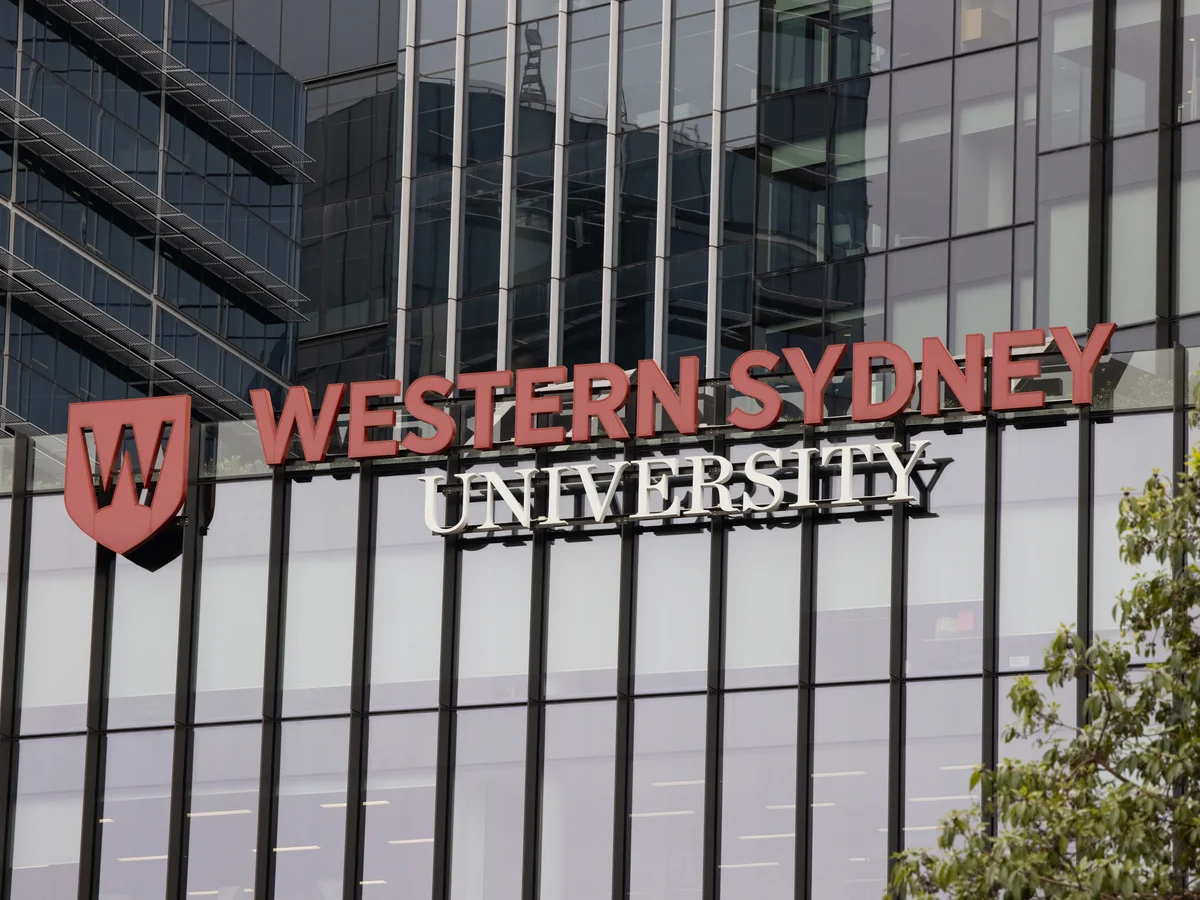
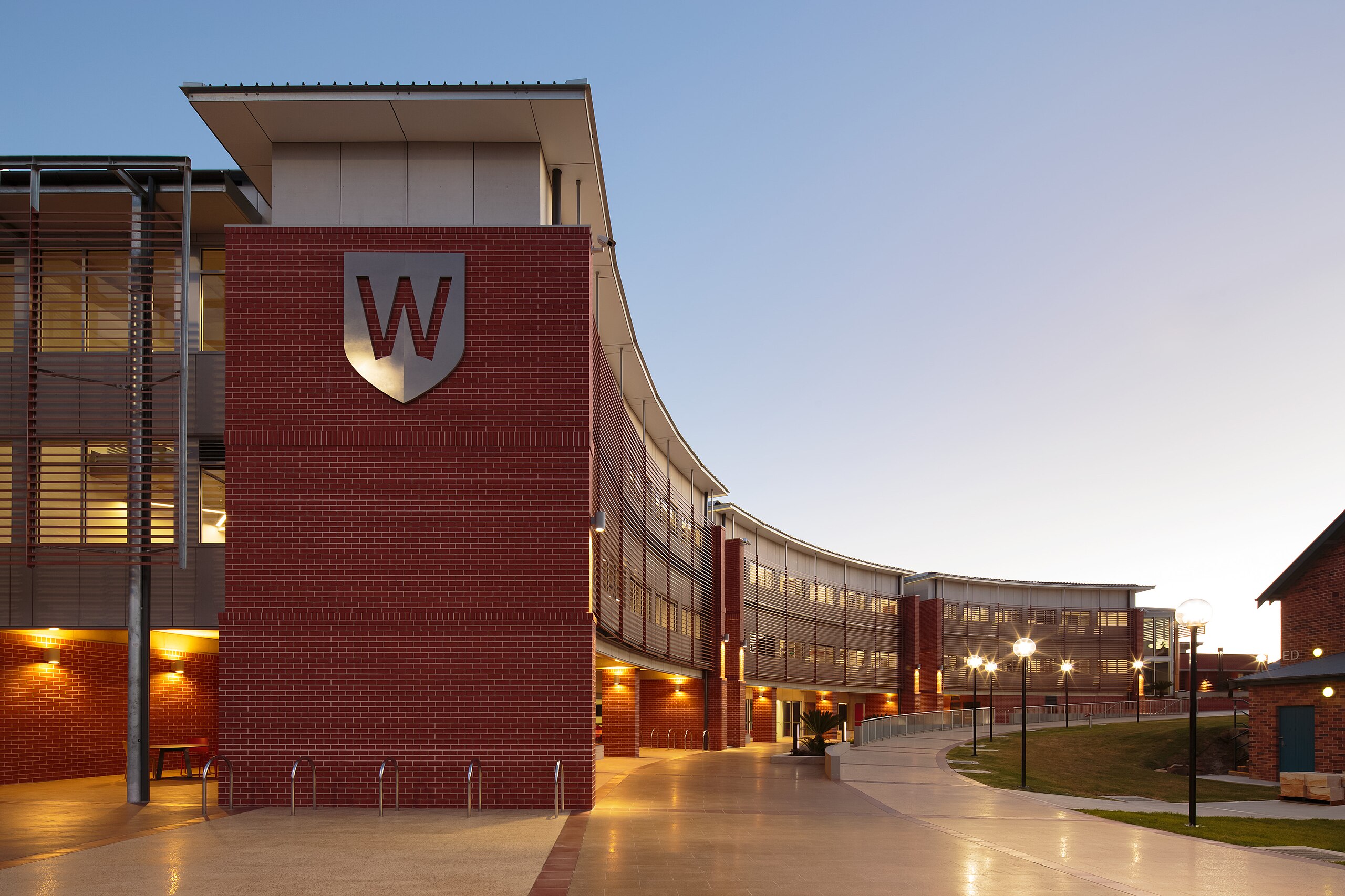
The recent decision by Western Sydney University to remove Islamic Studies as a Major and Minor from its Bachelor of Arts program has caused significant concern among students, academics, and the broader Muslim community risking serious community backlash.
Western Sydney University claims that a broader Religious Studies program will be an expansion of academic offerings but the real reason, according to a genuine university source, for doing this is that the enrolment numbers were down under university’s cost benefit analysis which is suspect and can be for a variety of administrative and market reasons and the composition of non-Muslim teaching staff.
Islamic Studies is an independent academic discipline and replacing it with a broader Religious Studies program seriously undermines this. Religious Studies may appear, on the surface, to be an expansion of academic offerings, in reality, however, it risks marginalising an important field of study at a university located in the heart of Australia’s largest Muslim population.
Western Sydney is home to one of the most diverse communities in the country. According to census data, a substantial proportion of Australia’s Muslim population live within the Greater Western Sydney region.
For many students from these communities, the presence of Islamic Studies at university is not merely symbolic, it provides an opportunity for rigorous academic engagement with their history, intellectual traditions, and contemporary social realities.
Islamic Studies is not simply about religion. It is an interdisciplinary field that engages with history, sociology, law, politics, philosophy, and international relations.
In a world where public discourse about Islam and Muslims is often shaped by misinformation and stereotypes, academic programs that foster critical and nuanced understanding are essential. Universities play a vital role in equipping students with the analytical tools needed to engage thoughtfully with complex global issues.
There are viable and academically robust pathways for the program to continue which enriches the humanities and social sciences curriculum but also strengthens intercultural dialogue and community engagement.
It would provide students, both Muslim and non-Muslim with opportunities to explore one of the world’s most influential civilisations through a scholarly lens. The decision to remove Islamic Studies also risks sending the wrong message to the community the university serves.
Western Sydney University has long positioned itself as an institution committed to diversity, inclusion, and community partnership. Yet removing a program dedicated to the study of Islam, particularly in a region where Muslim communities are rapidly growing appears contradictory to those values.
Beyond cultural representation, there are practical implications. The growth of Muslim schools across Sydney means there is increasing demand for graduates with expertise in Islamic studies, cultural literacy, and community engagement. Such knowledge is also valuable for careers in education, public policy, media, international relations, and social services.
At a time when Australia is grappling with issues such as social cohesion and Islamophobia, reducing academic space for the serious study of Islam and Muslim societies seems counterproductive.
Academic scholarship has the power to challenge misconceptions, humanise communities, and promote informed dialogue. Ultimately, this decision risks becoming a lose-lose situation.
The university loses an opportunity to position itself as a leader in Islamic scholarship, students lose access to specialised academic pathways, and the broader community loses an important bridge between academia and lived experience.
Reconsidering the removal of Islamic Studies would not only strengthen the university’s academic offerings but also reaffirm its commitment to serving the diverse communities of Western Sydney.
Source: AMUST

More News
Member Publications – August 2026
Member Publications – June 2026
Member Publications – May 2026
Member Publications – January 2026
- Member Publications – January 2026
February 5, 2026
Halim Rane and Adis Duderija, ‘New’ Religious Knowledge and the Influence of Religious Authorities on Relations between Muslims and Non-Muslims, in Muslims in Contemporary Australia, Brill, 2025. See article here.
All the best,

More News
Member Publications – August 2026
Member Publications – June 2026
Member Publications – May 2026
Untimely decision: WSU retires Islamic Studies
- Untimely decision: WSU retires Islamic Studies
January 17, 2026
Source: AMUST – Australian Muslim Times
Published: 13 January 2026
Title: Untimely Decision: WSU Retires Islamic Studies
Western Sydney University (WSU) has recently moved to retire Islamic Studies as Major and Minor areas of study and replaced them with a broader Studies of Religion Major and Minor. This decision comes at a critical time when the institutional, structured and regulated study of Islam in Australia is necessary for religious literacy and social cohesion.
Islam, like all other major world religions, is one of the major areas of study in universities worldwide. Leading institutions, including the University of Oxford and Edinburgh in the UK, McGill and Toronto in Canada, the University of Tübingen and Frankfurt in Germany, Leiden University in the Netherlands, and the Universities of Chicago, Columbia, UC Berkeley, and Harvard University in the US, to provide a few examples, all offer dedicated programs to teach Islamic Studies.
In these Western universities, Islamic Studies as an independent academic discipline is taught through a sophisticated blend of sociological and theological approaches. This ensures students understand the faith’s historical impact and its role in modern society. Graduates in this area of study work in government, public policy, social services, Islamic centres and organisations, education, research, international relations, media and so on.
In Australia, several major institutions are found to teach this academic specialisation. Charles Sturt University, the University of Melbourne and the Australian National University all provide dedicated pathways for Islamic or Middle Eastern Studies.
WSU joined this global and local academic community in 2007, placing Islamic Studies at the heart of the Greater Western Sydney region to serve its diverse population. However, in November 2025, the university notified students that the program would be retired as both a Major and a Minor from a BA degree.
Universities are not meant to operate solely for profit. These precious institutions have a deep-seated obligation towards society to preserve branches of knowledge that define human history, tradition, and collective future.
In a region as culturally significant as Western Sydney, keeping these academic pathways open is an educational imperative and a social necessity. Shutting them down risks losing an important bridge between the academic world and the local community.
The timing of this decision is particularly concerning.
The necessity of this education is particularly and tragically underscored by the recent terrorist attack at Bondi Beach. Such events prove that proper and institutionalised knowledge of Islam is vital to dismantle the radical ideas that justify violence. Academic programs provide the intellectual tools needed to deconstruct extremist narratives and protect young people from radicalisation.
Education also acts as a shield to protect the social fabric and stability. By teaching the complex history and constructs of Islam, universities provide evidence-based knowledge and foster the mutual respect required for a functional multicultural society.
Without regulated and accredited study options, there is a risk that individuals will seek religious education through informal or unvetted centres. History shows that a lack of institutionalised understanding of religion and social reality can open “dangerous doors.” Professional education acts as a safeguard, providing a balanced and moderated environment for learning.
Dr Jan A Ali, the former Islamic Studies Major Convenor at WSU, has been vocal about his concerns.
“The decision suggests a lack of understanding of the Muslim demography in Greater Western Sydney,” Dr Ali stated. He argues that if we want to stop events like the Bondi massacre, we must offer more Islamic Studies programs, not fewer.
Dr Ali emphasises that education is the key to preventing misguidance and social friction. He believes we must educate both Muslims and non-Muslims to ensure the faith is understood beyond the headlines of the media and politicians. However, despite submitting a detailed, empirically sound proposal to the WSU administration last year to keep the program alive, it was ignored.
The retirement of the Islamic Studies Major and Minor at Western Sydney University creates an unhealthy and dangerous academic void for the younger generation at a time when we can least afford it.
The university administration, the Department of Education and the Australian Government should step in to correct this mistake and prioritise social cohesion and academic excellence over profiteering.
Read the original article here.

More News
Member Publications – August 2026
Member Publications – June 2026
Member Publications – May 2026
Member Publications – December 2025
- Member Publications – December 2025
January 7, 2026
All the best,

More News
Member Publications – August 2026
Member Publications – June 2026
Member Publications – May 2026
Member Publications – November 2025
- Member Publications – November 2025
December 10, 2025
All the best,