
2025 Winner
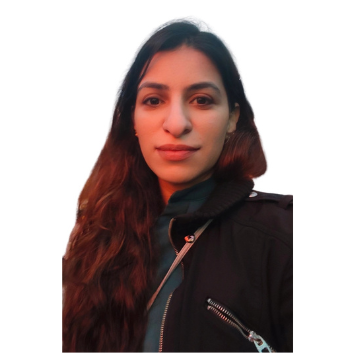
Dr. Heba Al-Adawy
Year Won
2025
About
Heba completed her BA (High Honors) from Mount Holyoke College (USA) and her MPhil from the University of Oxford (UK), before undertaking her doctoral research at the Australian National University, PhD in the program of International, Strategic and Political Studies. Her doctoral thesis offers a political ethnography of the militarised university in Pakistan and conceptualises 'dirty politics' as a set of ideological practices that displace critique in cultural and educational sites. Her work is situated methodologically within Interpretive Political Science, and her interests include militarisation in South Asia, youth activism, and South Asian diaspora politics in (liberal) settler colonies.
Thesis Title
Abstract of honours submission
In November 2019, an umbrella of progressive groups organised a Student Solidarity March in Pakistan. Through the March, activists sought to mobilise the wider student community on issues ranging from fee hikes, deteriorating campus infrastructure, sexual harassment scandals and surveillance of ethnic minorities. More fundamentally, they demanded political rights through student unions, which General Zia ul Haq's military dictatorship banned in 1984. For the activists, unions were not just a consultative body for student affairs, but a means to reclaim the notion of politics from its 'dirty' connotations. While the activists' broad concerns struck a chord among university students, their fundamental demand for political rights through unions invoked apprehensions of violence and anarchy within universities. This political ethnography is situated in the period of these events. It asks: why, thirty-five years after the ban, are students apprehensive about politics through unions? And, how have Pakistani public sector universities been depoliticised? To answer these questions, this thesis examines state practices that nurture distrust towards student politics and unions in Pakistan through, among other things, military historiographies; military-backed social media campaigns against progressive student activists; legal and bureaucratic practices within universities; and, military-endorsed youth development activities. The thesis draws upon 11 months of fieldwork in Pakistan, including multi-sited participant observations and 52 ethnographic interviews. The interviewees included political activists associated with progressive student collectives and others who identified in Urdu as ghair-siyasi (non-political), such as students attending extra-curricular activities, members of ethnic councils on campus, university administrators, and NGO officials working on youth engagement programs. Through analysis of the observational and interview data, this thesis theorises 'dirty politics' as a set of ideological practices that structure certain political effects. Decades after the ban, dirty politics represents violence as a timeless fact about student unions and displaces the militarized state as an object of critique. By elucidating dirty politics as a set of ideological practices, this thesis makes three contributions. First, by describing how these practices render student unions violent and anarchic, it explains the depoliticised condition of Pakistani public sector universities. Second, by analysing the affective and atemporal characteristics of these practices, it shows how dirty politics forecloses critique. Third, by showing how ideology generates distrust of politics in Pakistan, it offers a partial account of the militarized state.